
Building a Pool on a Hillside or Slope in NJ
If you’ve been dreaming of a backyard pool but your New Jersey property sits on uneven ground, you’re not alone. Thousands of homeowners across the Garden State are asking the same questions: Can I build a hillside pool in NJ? How does a pool on a slope in NJ actually work? And what role does a retaining wall pool in NJ play in making it all happen?
The good news is that sloped and hilly terrain doesn’t have to be a dealbreaker. In fact, when designed correctly, a hillside pool can become one of the most visually stunning features a New Jersey home can offer. But there’s a lot more planning, engineering, and investment involved compared to a flat-yard installation. You also need a strong understanding of what you’re getting into before you call a contractor to save you serious time and money.

Why New Jersey Properties Present Unique Challenges
New Jersey’s landscape is incredibly diverse. From the rolling hills of Morris and Hunterdon counties to the elevated terrain of Bergen and Passaic, many NJ homeowners are dealing with grades that range from a gentle 5% slope to dramatic 30%+ inclines. Even in suburban areas closer to the Shore, drainage elevation changes and fill-grade lots can create complications that a standard pool contractor isn’t always equipped to handle.
When you search for a hillside pool NJ contractor, you want someone who understands local soil composition, frost depth requirements, and New Jersey’s specific permitting landscape. The state requires building permits for in-ground pools. When a retaining wall is involved, structural engineering sign-off is often mandatory depending on the wall’s height and your municipality.
What Is a Hillside or Slope Pool, and How Is It Built?
For mild slopes (under 10%), the contractor may simply regrade the surrounding area, cutting into the high side and filling the low side to create a level platform for the pool. This is the most straightforward approach and usually the most affordable.
For steeper slopes, the process becomes significantly more involved. Here’s the general sequence of how these projects unfold:
1. Site Assessment and Engineering: Before any digging begins, a geotechnical engineer or structural engineer evaluates the soil stability, water table, and load-bearing capacity of the hillside. In New Jersey, especially in areas with clay-heavy soil or a high water table, this step is non-negotiable.
2. Excavation and Cut/Fill Work: Heavy equipment cuts into the hillside to create a flat shelf where the pool basin will sit. Excess soil is either removed from the site or redistributed strategically.
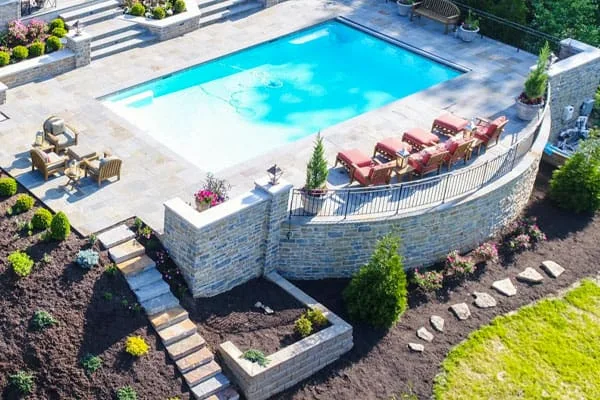
3. Retaining Wall Construction: This is where the project gets both complex and visually compelling. A retaining wall pool in NJ uses engineered walls, often built from poured concrete, segmental block, natural stone, or timber, to hold back the hillside and support the surrounding pool deck. These walls aren’t just structural; they’re a major design element.
4. Pool Installation: Once the site is stabilized, the pool shell is installed, either poured concrete (gunite or shotcrete), fiberglass, or vinyl liner, depending on your budget and design goals. Concrete is most common for hillside pools because of the customization it allows.
The Role of Retaining Walls in Hillside Pool Design
The retaining wall is arguably the most critical structural component of any retaining wall pool in the NJ project. It’s doing two jobs simultaneously: holding back tons of earth and serving as the architectural frame for your outdoor living space.
There are several types of retaining walls commonly used in New Jersey pool projects:
Poured Concrete Walls: The strongest and most durable option. Often used when the height of retained soil exceeds four feet, which typically triggers an engineering requirement in NJ.
Segmental Retaining Wall Blocks: Products like Allan Block or Versa-Lok are popular because they’re cost-effective, versatile, and visually attractive. They’re ideal for moderate slopes.
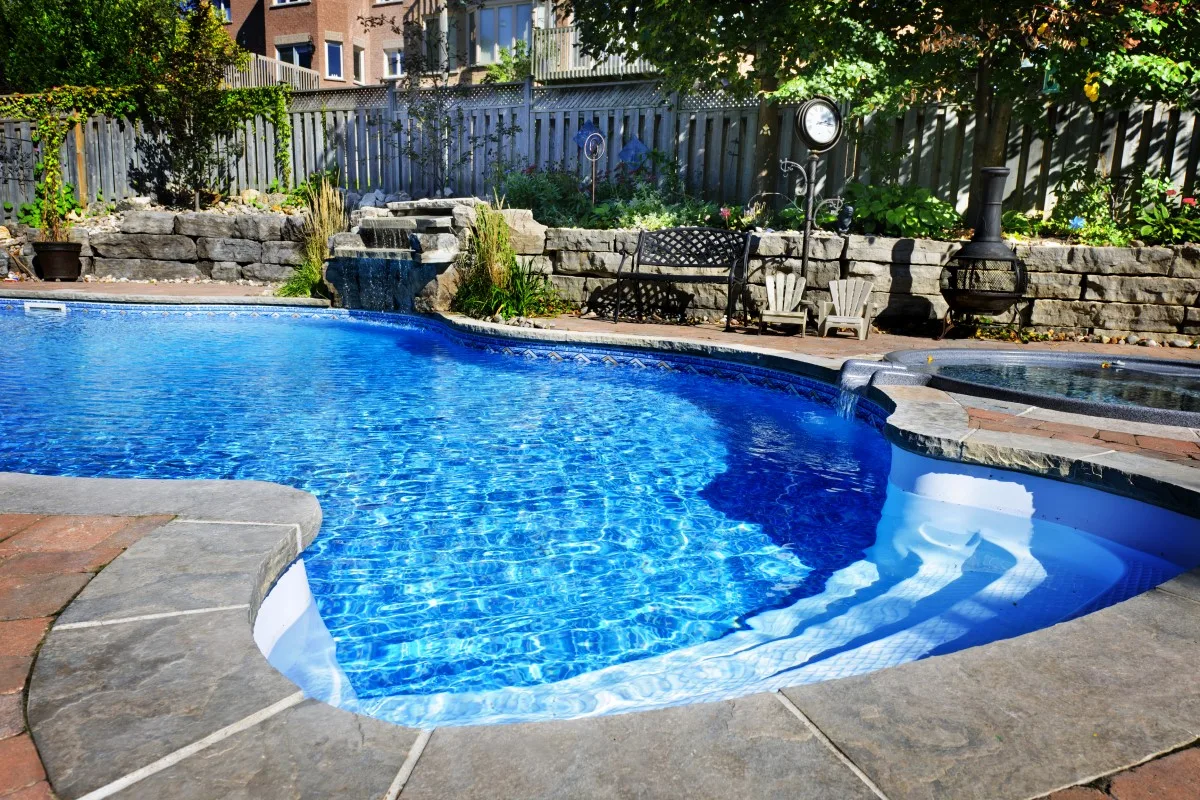
Natural Stone Walls: Fieldstone and bluestone walls are popular in upscale NJ hillside pool designs, particularly in Somerset, Morris, and Hunterdon counties where a more rustic or estate aesthetic is desired.
Timber/Railroad Tie Walls: Less common for pool applications due to longevity concerns, but occasionally used in lower-grade applications or as part of a multi-tier landscaping design.
The height of your retaining wall will largely dictate your permit requirements. In New Jersey, walls over four feet typically require a building permit and a licensed engineer’s stamp. Don’t let any contractor talk you out of this. Improperly engineered retaining walls are a genuine safety hazard, especially when they’re holding back soil directly adjacent to a pool full of water and people.
Design Possibilities: Making a Hillside Pool Work For You
One of the silver linings of building a hillside pool in NJ is the sheer design potential. Slopes force creativity, and some of the most spectacular backyard pools in the state exist precisely because the terrain demanded something extraordinary.
Popular design approaches include:
- Infinity or Vanishing Edge Pools: The slope creates a natural opportunity for a vanishing edge on the downhill side, giving the illusion that the water blends into the landscape or skyline beyond. These are especially popular in elevated communities with scenic views.
- Multi-Tier Outdoor Living: The cut-and-fill process naturally creates different elevation levels, which designers use to build tiered patios, outdoor kitchens, fire pit areas, and lounging zones that cascade down the hillside.
- Swim-Up Features and Built-In Seating: Retaining walls can be designed to double as pool seating walls or even swim-up bars when positioned at the pool’s edge.
- Waterfall and Water Feature Integration: The elevation change is a natural setup for cascading waterfalls that flow from the hillside directly into the pool. It is a feature that would be impossible to replicate on a flat lot.
Cost Considerations for a Pool on a Slope in NJ
Building a pool on a slope in NJ will almost always cost more than a comparable flat-yard installation. Here’s a realistic breakdown of where the added costs come from:
- Engineering fees: $1,500–$5,000+
- Extra excavation and soil removal: $3,000–$15,000+
- Retaining wall construction: $10,000–$50,000+ depending on height, length, and material
- Enhanced drainage systems: $2,000–$8,000
- Permitting: Varies by municipality, but budget $500–$2,500
When you add it all up, a hillside pool project in New Jersey can run anywhere from $80,000 to $200,000+ for a full installation with retaining walls, decking, and landscaping. That’s a wide range. It’s also why getting multiple quotes from contractors with documented hillside pool experience is so important.
Finding the Right Contractor for a Hillside Pool in NJ
Not every pool company in New Jersey has the experience to execute a slope or hillside installation properly. When vetting contractors, ask specifically about their retaining wall experience, whether they work with licensed engineers in-house or through referral, and request to see photos of previous hillside pool NJ projects they’ve completed.
Also verify that any contractor you hire is registered with the New Jersey Division of Consumer Affairs and carries adequate liability and workers’ compensation insurance. Given the structural complexity of these projects, cutting corners on vetting your contractor is simply not worth the risk.
Let Custom Pool Pros complete your North Jersey Project!